
Lake Roosevelt Women’s Homesteading Group
This is a 3 year program but members apply for one year at a time, and at the end of the year they will have the option to continue on for a 2nd year and then a 3rd year.
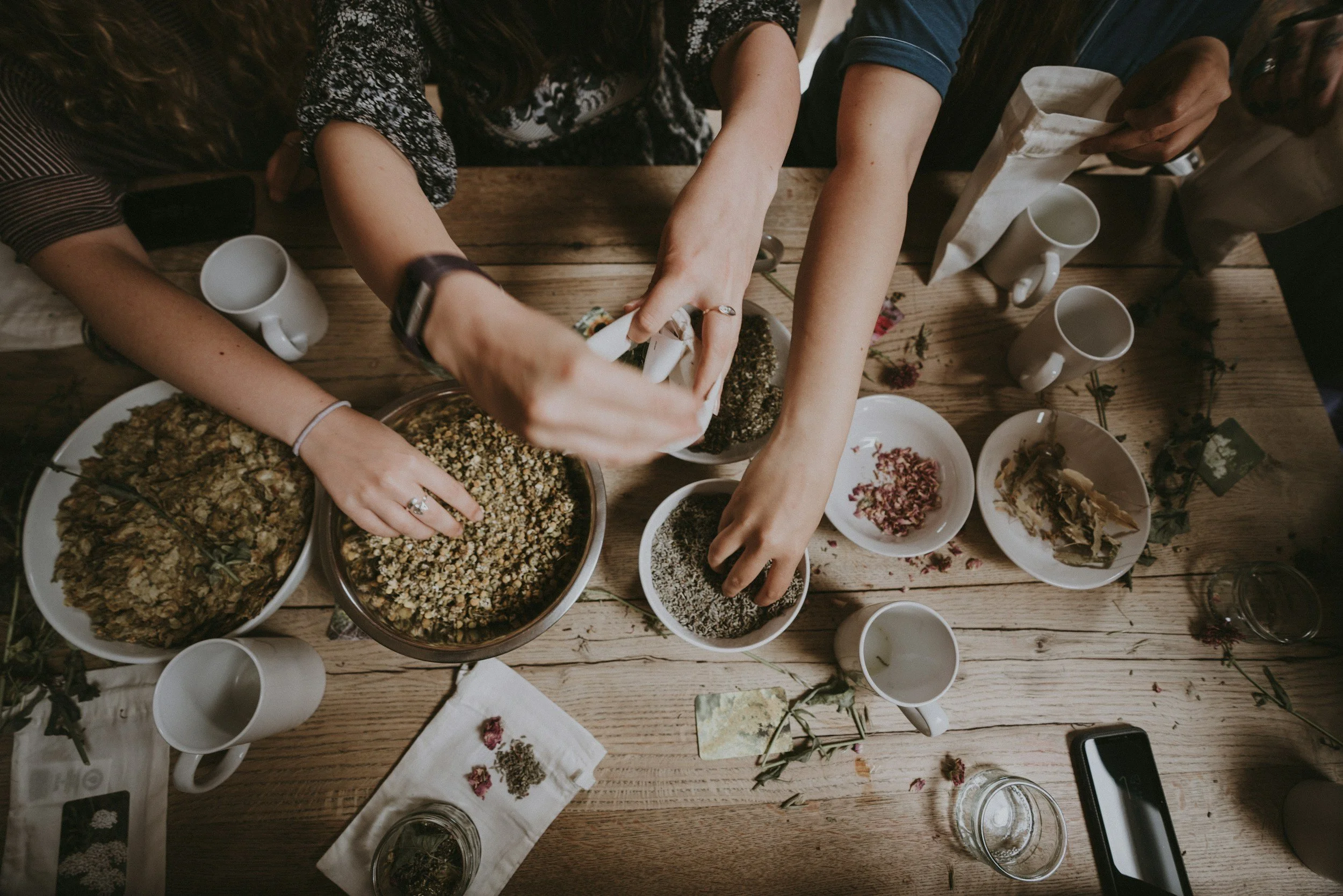
Each year's curriculum is taught in units and each unit is 3 months long. Then, we take a month off before starting the next unit.
Please note: over the years, we have found that a lot of members have a hard time making the meetings in April (Easter/Spring break), August (vacations/school starting) and December (Christmas/break) so we have arranged the schedule so that the breaks are taken on those months.
What to Expect
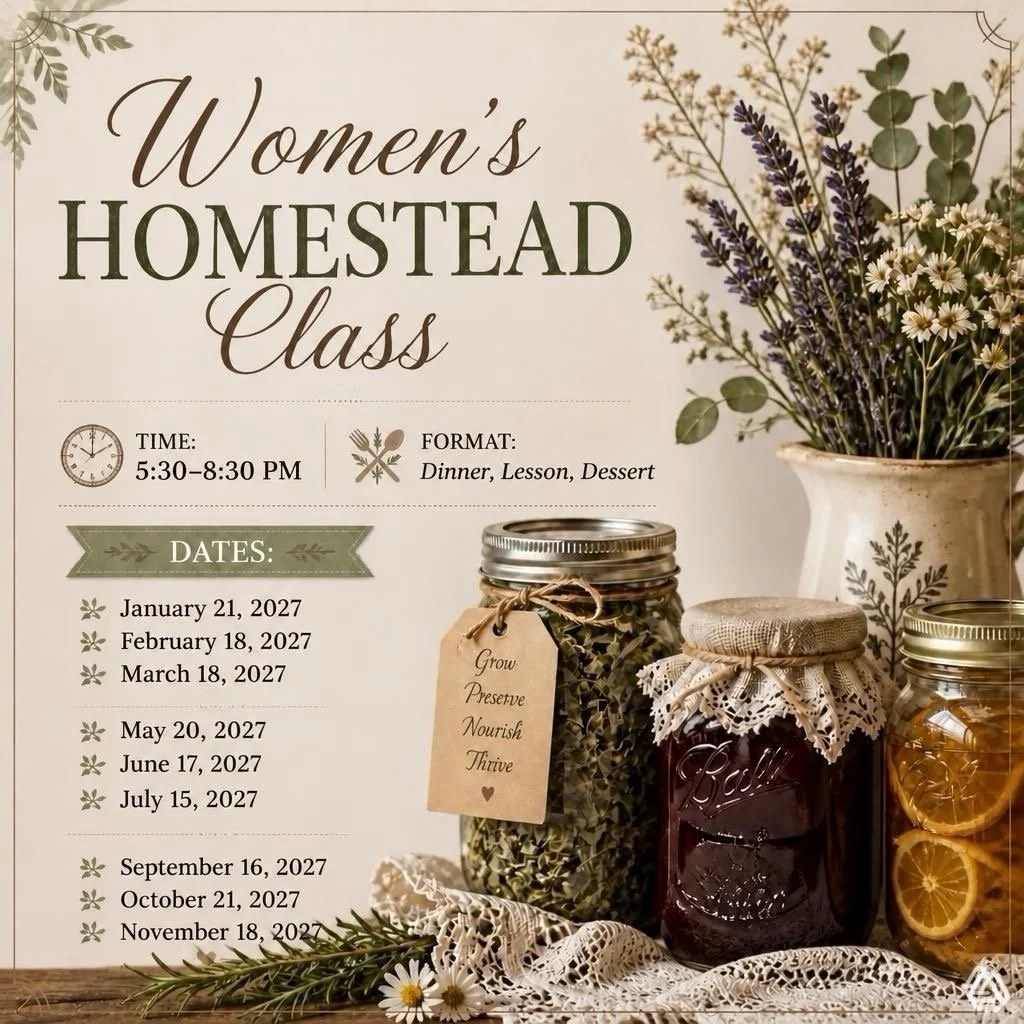
Each group meets from 5:30-8:30 pm once a month, on the designated day (schedule is posted below ahead of registration)
There are 10 women per group, and registration is open until spots are filled. After that, the groups are closed for the year.
Here is how a typical meeting goes:
Dinner: We share a meal together. Many of the ingredients will have been grown on our farms, but the rest will be locally sourced organic foods if possible. We will share recipes for everything we make so that you are able to reproduce these meals for your own household.
Discussion: Every month we have a discussion topic with the goal of getting to know each other better. The conversations get more and more deep and thought provoking as the year goes on. Every month, at least a few ladies remark, “This is so refreshing, I can’t talk about this stuff anywhere else!” You’ll have to take my word for it but the dinner discussions are often the highlight of the night!
Lesson: After eating, we move on to the skill or craft portion of the evening. These lessons focus on the practical day to day application of preserving, cooking, baking, fermenting and eating seasonally year round.
Dessert & time to chat. The lesson is typically over around 8:30 pm. Some women leave right away because of work or kids, but most of the group enjoys the time to chat with each other.
Take home supplies:
At the first meeting, members receive a course binder. Every month, they receive the notes, instructions and recipes for the month’s lesson and dinner. By the end of the year, members have over 200 pages of information so that they can keep referring back to what they learned indefinitely.
Almost every month, members also leave with something they crafted or something that pertains to the lesson learned. Some examples: medicinal herb remedies (fire cider, garlic honey ferment, etc.), soap, tallow balm, home canned jam, etc.
Video lessons
After many requests, we now have video tutorials for every single lesson taught in the meetings. After every meeting, members gain access to the corresponding video lessons that they can watch at home.
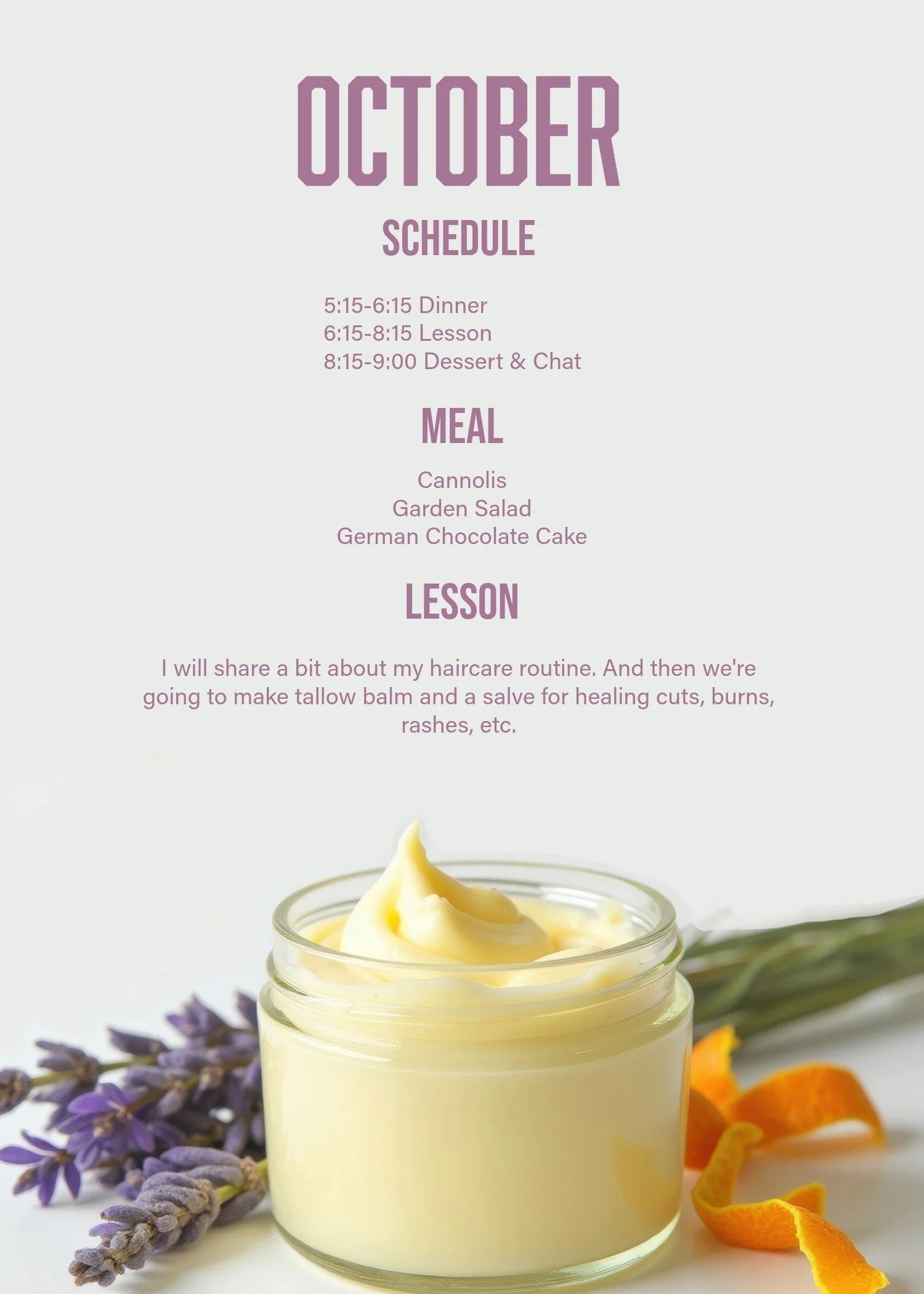
Before each meeting, I send out an email with the itinerary, meal plan, and discussion topic for the upcoming meeting. It looks something like this:
YEAR ONE (2027)
January
Rendering & Using Animal Fats
The most commonly consumed fats in America do more harm than good. This month, members learn about lard and tallow — how to source them, how to render them down, how to make balms & lotions from them, and how to cook with them in a way that’s both nourishing and genuinely delicious.
February–March
Natural Soap Making
Learn how to make natural soap making with lard, tallow, clay and natural dyes. We share our favorite soap recipes that are loaded with benefits for your skin without any harsh chemicals. In March, members get to apply what they’ve learned and split into groups to have a soap making competition. This is typically one of the favorite classes of the year!
May–July
Canning 101: Water Bath & Pressure Canning
In May, members learn how to preserve fruits by water bath canning without sugar or artificial preservatives. In June, they then learn how to preserve meats, beans, vegetables and meals by pressure canning. Then in July, members get to apply what they’ve learned with a canning day. They divide into groups and can a variety of recipes. By the end of the unit, all members should be canning confidently!
September–October
Medicinal Remedies
Learn to craft all of our most popular immune-boosting remedies that have become member favorites. Over the years, our community has consistently reported dramatic reductions in winter illness duration and frequency after incorporating these traditional remedies into their daily routine.
November
Natural Cleaners
Learn how to make your own laundry detergent, dishwasher detergent, and other cleaners. By the end of the meeting, you’ll have all that you need to eliminate a lot of toxins from your home.
YEAR TWO (2028)
January
Sourdough Made Simple
Learn what sourdough is, the science behind it, how to care for a starter the easy way, and the essential steps of making a loaf — including the “why” behind every step so you can troubleshoot when things go wrong. This is a hands-on lesson and you leave with your own starter so you can begin baking the next day.
February–March
Ancient Grains: Home Milling, Baking & Sourdough 2.0
Wheat contains 40 of the 44 essential nutrients our bodies need — most of which aren’t digestively accessible in modern flour. We walk you through the entire process: how to source grains, choose the right mill, bake with ancient grains so your recipes actually turn out, and make the most nutrient-dense sourdough possible.
May–July
Create & Craft
We are keeping this unit a surprise. During these months, members will have the opportunity to channel their creative side with a fun line up of crafts. These classes are always a member favorite!
September
Fermenting the Harvest
Your gut biome regulates your immune system, blood sugar, heart health, mood, digestion, and so much more. As harvest season begins, we share how to preserve the bounty and boost the gut biome with good bacteria and nutrients. Learn to make sauerkraut, apple cider vinegar, hot sauces, and more.
October
Fermented Drinks: Kombucha & Water Kefir
Store-bought kombucha is pasteurized — the beneficial bacteria are gone. Home-brewed kombucha is loaded with live cultures, and it tastes better too. Members receive a SCOBY starter this month and learn to make both kombucha and water kefir at home.
November
Fermented Yogurts
Home-fermented yogurt is rich in a diversity of probiotics and beneficial bacteria, without the sugar and preservatives found in most commercial yogurts. This month, you’ll learn the simple, easy way to make your own fermented yogurt at home.